
Imagine this scenario: your playful pup is happily frolicking around, when suddenly, they start choking. It’s terrifying, isn’t it?
As a devoted dog owner, you want to ensure your furry friend is safe at all times. But what do you do when your dog starts choking? In those frantic moments, knowing the right steps can make all the difference.
This guide is here to help you understand exactly what actions to take when your dog is in distress, so you can act quickly and confidently. By the end of this article, you’ll feel prepared and empowered to handle these emergencies, ensuring your beloved pet stays healthy and happy. Stay with us to learn how you can be the hero your dog needs.
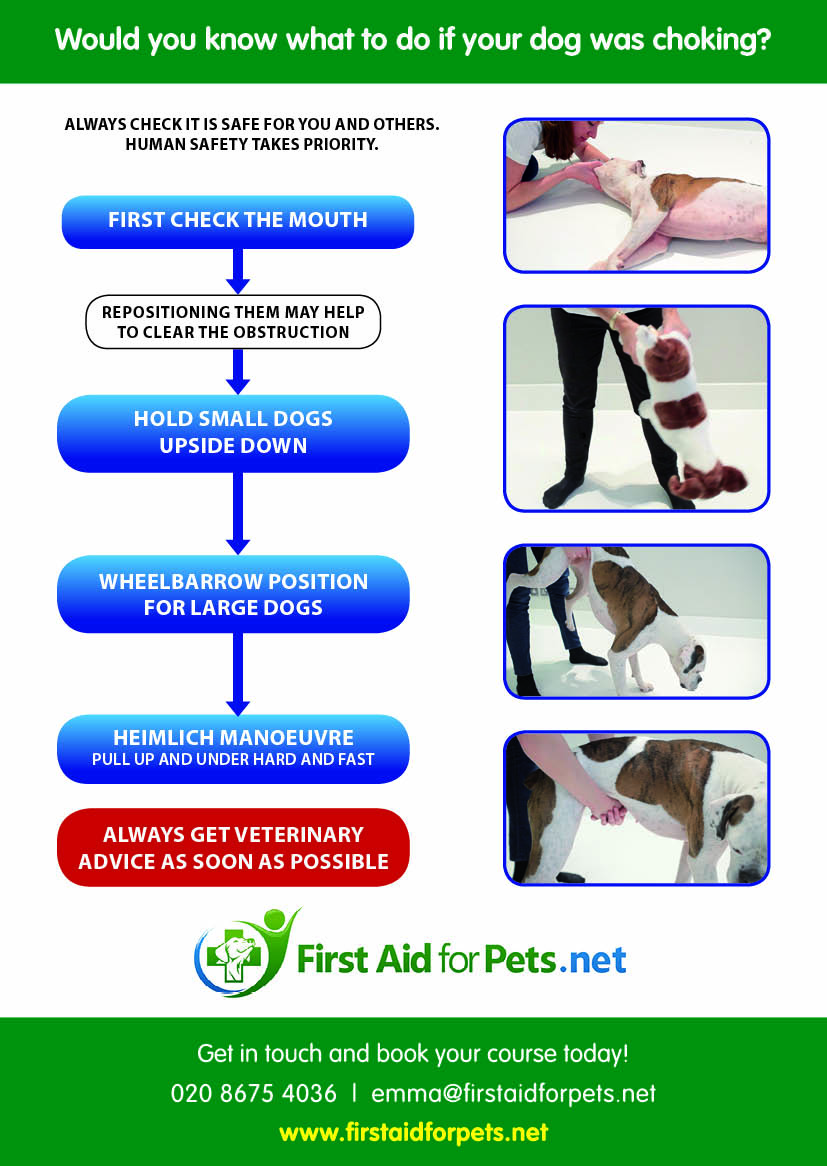
Credit: firstaidforpets.net
Recognizing Choking Signs
Dogs are curious creatures and love to explore. Sometimes, this leads to choking. Recognizing the signs early can save your dog’s life. It’s crucial to stay calm and act swiftly. Knowing what to look for is the first step.
Signs Of Distress
A choking dog shows signs of distress. They may paw at their mouth. They might also cough or gag repeatedly. Watch for sudden panic or anxiety. These signs mean they need help fast.
Difficulty Breathing
Breathing trouble is a serious sign. If your dog struggles to breathe, it could be choking. Listen for wheezing sounds. Observe if their breathing is labored. Immediate action is necessary in such cases.
Visible Object In Mouth Or Throat
Sometimes, the object is visible. Check your dog’s mouth for foreign items. Use a flashlight if needed. Be careful not to push the object further. This can worsen the situation.
Blue Or Pale Gums
Blue or pale gums indicate a lack of oxygen. This is a critical sign of choking. Check your dog’s gums quickly. Compare them to their normal gum color. If they appear pale or blue, act immediately.
Excessive Drooling
Excessive drooling can be a choking sign. It happens when they can’t swallow properly. Notice if drooling is more than usual. Combined with other signs, it points to choking.
Unusual Sounds
Unusual sounds can mean choking. Listen for coughing, wheezing, or high-pitched noises. These sounds are cries for help. They indicate your dog is struggling.
Urgency To Act
Choking signs demand immediate action. Recognize them and respond quickly. Your swift action can save your dog’s life. Stay calm and follow the necessary steps. Your dog depends on you.
Stay Calm
When a dog chokes, it can be a scary situation. Your first step should be to stay calm. Panic can make the situation worse. Keeping a clear head helps you act quickly and effectively. This can make all the difference. Understanding how to stay calm can save your dog’s life.
Understand The Situation
Recognize the signs of choking. Coughing, gagging, or pawing at the mouth. These are clear indicators. If your dog is struggling to breathe, it’s time to act. Know the symptoms to keep calm.
Take Deep Breaths
Before you do anything, pause. Take a deep breath. This helps you focus. It also calms your nerves. A calm mind makes better decisions. Remember, your dog needs you to think clearly.
Assess The Severity
Look at your dog’s behavior. Is it breathing or gasping? Can you see an object blocking the throat? This assessment helps you decide the next steps. Knowing the severity guides your actions.
Speak Softly
Talk to your dog in a calm voice. This reassures them. Your dog can feel your stress. A soft tone can help soothe them. It keeps them from panicking further. Your voice can be a source of comfort.
Prepare For Action
Once calm, get ready to help. If you need to, call for help. Or, prepare to remove the object yourself. Being calm sets you up for effective action. Stay focused and be ready to assist.
Assess The Situation
Dogs sometimes get themselves into tricky situations. Choking is a serious one. Knowing what to do can save your dog’s life. First, assess the situation calmly and quickly. This helps you decide on the best course of action.
Identify The Obstruction
Look inside your dog’s mouth. Can you see the object causing trouble? Check the back of the throat. Use a flashlight if necessary. Don’t put your fingers blindly inside. Dogs may bite unintentionally.
If the object is visible, carefully try to remove it. Use tweezers or your fingers. Ensure your dog is calm while you do this. Don’t push the object further in.
Gauge Severity
Observe your dog’s breathing. Is it struggling to breathe? Check for coughing or wheezing. Notice any signs of distress. This indicates how severe the choking is.
Evaluate your dog’s behavior. Is it lethargic or panicked? These are critical signs. Decide if you need professional help immediately. Vet attention may be necessary.
If breathing is normal, monitor your dog closely. Ensure the obstruction doesn’t worsen. Be ready to act if the situation changes.
Performing First Aid
Seeing your dog choke is terrifying. Knowing first aid steps can save your pet’s life. Quick action is crucial. Stay calm and focused. Follow these steps to help your dog.
Opening The Mouth Safely
Approach your dog slowly. Speak softly to avoid panic. Hold your dog’s muzzle gently. Use both hands for stability. Open the mouth carefully. Don’t force it open. Look inside for visible objects. Avoid touching the throat. This could push the object further down.
Removing Visible Objects
If you see an object, act cautiously. Use your fingers or tweezers. Grip the object firmly. Pull it out gently. Be careful not to push it further. If it’s stuck, don’t tug hard. This may injure your pet. Seek immediate veterinary help if needed.
Applying The Heimlich Maneuver
Choking can be a terrifying experience for both you and your dog. Knowing how to apply the Heimlich Maneuver can save your pet’s life. It’s crucial to act quickly and calmly. The Heimlich Maneuver is different for small dogs and large dogs. Understanding these differences ensures you can help effectively.
For Small Dogs
Start by holding your small dog with its back against your chest. Use one hand to find the rib cage with your fingers. Place your other hand behind the first hand. Apply gentle pressure upward and inward towards the rib cage. Check if the object is expelled. If not, repeat the process quickly. Always be gentle to avoid injury.
For Large Dogs
For large dogs, position yourself behind your pet. Wrap your arms around their waist. Make a fist with one hand. Place it just below the rib cage. Place your other hand over your fist. Use both hands to push upward and inward. Check if the object comes out. Repeat if necessary. Ensure your movements are firm but controlled.

Credit: www.co.price.wi.us
When To Seek Veterinary Help
A choking dog needs fast action. Try removing the object gently if you can see it. If your dog struggles to breathe, contact a vet immediately for help.
If your dog is choking, it’s a heart-stopping moment. You might feel a rush of panic, but knowing when to seek veterinary help is crucial. Not every choking incident requires a vet visit, but some situations do. Being able to identify these moments can save your dog’s life.Persistent Obstruction
If your dog continues to choke after you’ve tried to help, it’s time to call the vet. Sometimes, what seems like a small object can lodge itself in a way that’s hard to dislodge. You might have removed something from their mouth, but if they still struggle, it could mean a piece remains stuck. Your quick thinking can make a difference. If a dog can’t breathe or if the obstruction won’t budge, don’t wait. The longer the obstruction remains, the greater the risk of serious injury or worse.Signs Of Distress
Watch your dog closely for signs of distress. Are they coughing relentlessly or pawing at their mouth? Do they appear lethargic or are they drooling excessively? These signs mean your dog needs immediate professional care. You know your dog best. If their behavior seems off, trust your instincts. Have they lost consciousness or turned blue? These are urgent signals to get them to the vet without delay. Choking can be terrifying for both you and your pet. By knowing when to seek veterinary help, you can act quickly and effectively. Stay calm, observe, and make the call when necessary. Your dog’s health depends on it.Preventing Future Incidents
Act quickly when your dog chokes to prevent future incidents. Check their airway and remove any obstruction carefully. Learn basic pet first aid to handle emergencies effectively and keep your furry friend safe.
Preventing future choking incidents is vital for your dog’s safety. Simple steps can ensure your furry friend’s well-being. Developing safe eating habits and selecting appropriate toys are key.Safe Eating Habits
Ensure your dog eats slowly. Fast eating can lead to choking. Use a slow feeder bowl to help with this. It makes them eat more deliberately. Portion control is also important. Give smaller meals throughout the day. Avoid giving large chunks of food. Cut their food into smaller, manageable pieces. Monitor them during meals. Be vigilant about their eating behavior.Choosing Appropriate Toys
Choose toys suitable for your dog’s size and chewing strength. Avoid toys that can easily break apart. Small pieces can become a choking hazard. Opt for durable, non-toxic materials. Regularly inspect toys for wear and tear. Replace damaged toys immediately. Supervise playtime with new toys. Ensure they do not swallow parts. Always prioritize safety over novelty.:max_bytes(150000):strip_icc()/how-to-help-a-choking-dog-infographic-b0acb39b7f7e4665bc03fac3abce88b8.png)
Credit: www.dailypaws.com
Emergency Kit For Pets
Dogs can choke on small objects or food. Stay calm and act quickly. Check their mouth for blockages and gently remove it if visible. If breathing remains difficult, use the Heimlich maneuver for dogs. Prompt action can save your pet’s life.
Always consult a vet after a choking incident.
When your dog is in distress, every second counts. Having an emergency kit for pets can be a lifesaver when your furry friend chokes or encounters other emergencies. These kits are not just for show; they are practical tools that can make all the difference in a crisis. Do you have one ready for your pet? If not, it’s time to consider what you should include and how to keep it in top condition.Essential Items
Start with the basics. A pet emergency kit should include gauze and bandages for wounds, tweezers to remove splinters or foreign objects, and a small flashlight for better visibility. Antiseptic wipes are crucial to clean any cuts or scrapes. Don’t forget a muzzle. Even the friendliest dog can become defensive when in pain. A pair of gloves can protect your hands while you help them. A blanket can provide warmth and comfort, helping to calm your pet. One often overlooked item is dog-safe saline solution. It can help rinse out your dog’s mouth if they ingest something harmful or to clean wounds. Keep a copy of your pet’s medical records and emergency contact numbers in a waterproof bag.Regular Maintenance
An emergency kit is only helpful if it’s up-to-date. Schedule a monthly check. Replace expired items and restock what you’ve used. Consider the seasons. In winter, add a paw balm or protectant. In summer, include sunscreen designed for pets. By adapting your kit, you ensure it meets your pet’s needs year-round. Involve your family in the maintenance process. It’s an excellent opportunity to teach them how to use the items. This way, more than one person knows what to do in an emergency. Do you feel prepared to act quickly if your dog chokes? With the right tools and a little planning, you can be. An emergency kit is a small investment that offers peace of mind and could save your pet’s life.Frequently Asked Questions
What Are The Signs Of A Choking Dog?
Signs include coughing, gagging, pawing at the mouth, or difficulty breathing. Your dog may appear anxious or panicked. If you notice these signs, take immediate action. Check their mouth for any visible obstructions. If necessary, perform first aid techniques to help your dog breathe better.
How Can I Help My Choking Dog?
Stay calm and approach your dog gently. Open their mouth and check for visible obstructions. If you can’t see anything, perform a gentle chest thrust. Consult your veterinarian immediately if the situation doesn’t improve. Remember, quick action can save your dog’s life.
When Should I Call A Vet For Choking?
Call a vet if your dog continues to choke after first aid. If they are unable to breathe or show signs of distress, seek professional help immediately. Persistent choking needs urgent medical attention to prevent serious complications or damage.
Can Small Objects Cause Choking In Dogs?
Yes, small objects can cause choking in dogs. Items like toys, bones, or food can obstruct their airway. Monitor your dog’s playtime and eating habits closely. Ensure their environment is free of small, swallowable objects to prevent choking incidents.
Conclusion
Act quickly when your dog chokes. Clear the airway gently. Stay calm and focus on your dog’s needs. Use basic techniques to help your dog breathe. Consider visiting a vet if choking persists. Your dog’s safety comes first. Practice prevention for future safety.
Keep small objects out of reach. Learn first aid for pets. It’s crucial for emergencies. Always watch your dog closely. Protect them from choking hazards. Understanding these steps saves lives. Stay informed for your pet’s health. Your prompt action makes a big difference.
Keep your pet safe and sound always.