
Pet animals vs farm animals serve different roles in our lives. The key difference between pet and farm animals lies in their purpose and living environments. Pets are companions, offering emotional support and joy, and typically kept indoors. On the other hand, farm animals are raised for agricultural needs—providing food, labor, or resources—and often reside outdoors in fields, barns, or coops. Understanding these distinctions helps us appreciate their unique contributions to our world.
Pet animals include dogs, cats, and birds. They provide emotional support and companionship. Farm animals include cows, chickens, and pigs. They are raised for products like milk, eggs, and meat. Pet animals often receive more personalized care. Farm animals are managed in groups.
Both types of animals require proper care and attention. Understanding their needs helps ensure their well-being. Pets often live in homes with their owners. Farm animals typically reside in barns or fields. Each type of animal plays a unique role in human life. The distinction lies in their primary purpose and living conditions.
Pet Animals
Pet animals are those that live with us in our homes. They provide companionship, joy, and sometimes even protection. These animals are usually domesticated to live closely with humans. They are different from farm animals, which are raised for food, work, or other products.
Domestication History
The domestication of pets dates back thousands of years. Dogs were among the first animals to be domesticated. Evidence suggests that dogs were domesticated over 15,000 years ago. Cats followed, with domestication occurring around 9,000 years ago. Pets like birds, rabbits, and hamsters have a more recent history of domestication.
Unlike farm animals, pet animals were primarily domesticated for companionship. Ancient civilizations, like the Egyptians, revered cats. Dogs were often used for hunting and protection. Over time, the role of pets evolved, becoming beloved family members.
Common Species
There are many species commonly kept as pets. Here are some popular ones:
- Dogs: Various breeds like Labrador, Beagle, and Poodle.
- Cats: Breeds like Siamese, Persian, and Maine Coon.
- Birds: Parrots, Canaries, and Budgerigars.
- Small Mammals: Rabbits, Hamsters, and Guinea Pigs.
- Fish: Goldfish, Betta, and Guppies.
Each species requires different care and attention. Dogs need regular walks. Cats need a litter box. Birds need a clean cage. Small mammals need fresh bedding. Fish need clean water. Knowing these needs helps in choosing the right pet.
Farm Animals
Farm animals play a crucial role in agriculture and human survival. They provide food, labor, and other resources. Understanding these animals helps us appreciate their importance in our daily lives.
Domestication History
Farm animals have a long history of domestication. Domestication began thousands of years ago. Early humans tamed wild animals for food and work. This process gradually changed the animals’ behavior and physical traits. Farmers selectively bred animals for desired characteristics. This led to more docile and productive livestock.
Cattle were among the first animals domesticated. People used them for milk, meat, and labor. Sheep and goats soon followed. They provided wool, meat, and milk. Pigs were domesticated for their meat. Chickens were kept for their eggs and meat. Each species adapted to human needs over time.
Common Species
| Animal | Purpose |
|---|---|
| Cattle | Milk, Meat, Labor |
| Sheep | Wool, Meat, Milk |
| Goats | Milk, Meat |
| Pigs | Meat |
| Chickens | Eggs, Meat |
Cattle are vital for milk and meat production. They also help in plowing fields. Sheep produce wool for clothing. Their meat and milk are also valuable. Goats are hardy animals. They thrive in harsh conditions. They provide milk and meat. Pigs are known for their meat. They are efficient converters of feed into protein. Chickens are kept for their eggs and meat. They are easy to raise and manage.
- Cattle: Essential for dairy and beef industries.
- Sheep: Source of wool, meat, and milk.
- Goats: Hardy and versatile for milk and meat.
- Pigs: Efficient meat producers.
- Chickens: Provide eggs and meat easily.
Farm animals are integral to our food system. They provide essential products and labor. Their domestication history is rich and fascinating. Understanding their roles helps us appreciate their contributions.
Living Environments
Understanding the living environments of pet animals and farm animals is essential. Each type of animal has unique needs and preferences. This section explores the different living environments for pet animals and farm animals.
Indoor Settings
Pet animals often live in indoor settings. These include homes, apartments, and condos. Common pet animals like dogs, cats, and hamsters thrive indoors. They enjoy comfortable temperatures and controlled environments.
Indoor settings offer safety from predators and harsh weather. Pet owners provide cozy beds, toys, and food dishes. Regular cleaning and maintenance ensure a healthy space for pets.
Farm animals, on the other hand, rarely live indoors. Some young or sick animals may need temporary indoor care. Most farm animals like cows, pigs, and chickens prefer outdoor spaces.
Outdoor Settings
Farm animals are well-suited to outdoor living. They need large areas to roam and graze. Farms provide pastures, barns, and coops. These spaces offer shelter and protection from extreme weather.
Farmers ensure animals have enough food and water. Outdoor settings allow farm animals to exhibit natural behaviors. This includes grazing, foraging, and socializing with other animals.
Pet animals may also enjoy outdoor time. Dogs love walks, and some cats enjoy secure outdoor spaces. Owners use leashes or fenced yards to keep pets safe.
Outdoor settings for pets should be secure. They must prevent escapes and protect from other animals. Proper care ensures pets enjoy fresh air without risks.
| Animal Type | Indoor Settings | Outdoor Settings |
|---|---|---|
| Pet Animals | Homes, apartments, cozy beds | Fenced yards, leashed walks |
| Farm Animals | Temporary indoor care for young or sick | Pastures, barns, coops |

Credit: www.amazon.com
Care Requirements
Pet animals and farm animals have different care requirements based on their living environment and purpose.
Daily Care
- Pet Animals: Regular feeding, grooming, and exercise.
- Farm Animals: Feeding, cleaning pens, and monitoring health daily.
Specialized Care
| Aspect | Pet Animals | Farm Animals |
|---|---|---|
| Veterinary Care | Yearly check-ups and vaccinations. | Routine vaccinations and emergency care. |
| Shelter | Indoor shelter with comfortable bedding. | Outdoor shelters or barns suitable for the species. |
| Exercise | Regular walks or playtime. | Access to large grazing areas or pens. |
Dietary Needs
Understanding the dietary needs of pet and farm animals is crucial. Different animals have unique nutritional requirements. These needs impact their health and well-being. Let’s explore the diets of both pet and farm animals.
Pet Diets
Pet animals, like dogs and cats, need balanced diets. Their food must contain the right nutrients. Common pet diets include:
- Protein: Essential for growth and repair.
- Fats: Provide energy and support cell function.
- Carbohydrates: Offer energy and fiber.
- Vitamins and Minerals: Necessary for overall health.
Pets often eat commercial pet food. These products are designed to meet their specific needs.
Farm Animal Diets
Farm animals have different dietary needs. Their diets often depend on their role. For example, dairy cows need diets high in energy. Common farm animal diets include:
| Animal | Diet | Key Nutrients |
|---|---|---|
| Cattle | Grass, hay, grains | Protein, fiber, energy |
| Pigs | Corn, soybeans, kitchen scraps | Protein, fats, carbohydrates |
| Chickens | Grains, insects, greens | Protein, vitamins, minerals |
Farmers often supplement these diets with vitamins and minerals. This ensures the animals stay healthy and productive.
Behavioral Traits
Understanding the behavioral traits of pet animals and farm animals is essential. These behaviors reflect their nature, environment, and relationship with humans. Let’s dive into the behavioral differences between these groups.
Pet Behavior
Pet animals often live indoors or in a controlled environment. This setting influences their behavior significantly.
- Social Interaction: Pets, like dogs and cats, show high social interaction. They seek attention and affection from their owners.
- Playfulness: Pets exhibit playful behavior. They enjoy toys and interactive games.
- Training: Pets can be easily trained. They follow commands and learn tricks.
- Dependence: Pets rely heavily on humans for food, shelter, and care.
Farm Animal Behavior
Farm animals generally live in open spaces or barns. Their behavior differs due to their environment and purpose.
- Herd Behavior: Many farm animals, like cows and sheep, exhibit herd behavior. They feel safer and more comfortable in groups.
- Grazing: Farm animals spend a lot of time grazing. They move around fields to find food.
- Less Playful: Farm animals are less playful compared to pets. Their activities are more functional, like grazing and resting.
- Independent: Farm animals are more independent. They do not rely as much on human interaction for daily survival.
Roles And Functions
Pet animals and farm animals serve different purposes. Understanding these roles helps us appreciate their unique contributions. Let’s explore how these animals fit into our lives.
Companionship
Pet animals are mainly kept for companionship. They provide emotional support and reduce stress. Pets like dogs, cats, and birds are common in households. They help people feel less lonely. Playing with pets can make you happy. Pets also teach children about responsibility.
Agricultural Roles
Farm animals have specific agricultural roles. They help produce food and other goods. Here are some examples:
- Cows: Provide milk, meat, and leather.
- Chickens: Lay eggs and provide meat.
- Sheep: Produce wool and meat.
- Horses: Help in farming and transportation.
Farm animals also help in plowing fields and fertilizing soil. They are essential for a sustainable farm system.
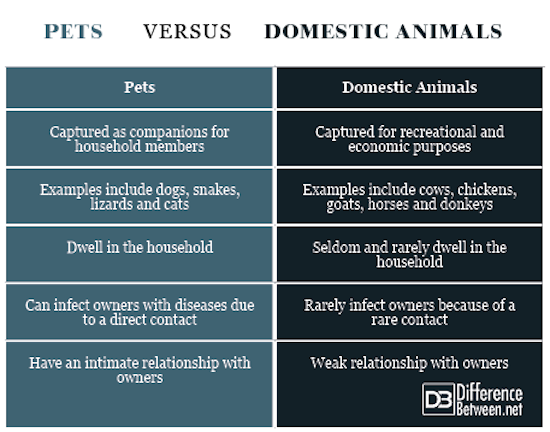
| Pet Animals | Farm Animals |
|---|---|
| Provide companionship | Help in food production |
| Reduce stress | Assist in farm work |
| Teach responsibility | Produce goods like wool and leather |
Credit: www.differencebetween.net
Health And Veterinary Care
Health and veterinary care are crucial for both pet animals and farm animals. Understanding their unique needs ensures their well-being and longevity. This section explores the common health issues and preventive care for both types of animals.
Common Health Issues
Pet animals and farm animals face different health challenges. Here’s a quick overview:
| Pet Animals | Farm Animals |
|---|---|
|
|
Preventive Care
Regular check-ups and preventive measures are vital for both pet and farm animals.
For pet animals:
- Annual vet visits
- Vaccinations
- Regular dental care
- Proper nutrition
For farm animals:
- Scheduled veterinary check-ups
- Vaccination programs
- Parasite control
- Clean living conditions
Veterinary care helps prevent many common diseases. It ensures animals live healthy lives.
Legal Considerations
Understanding the legal considerations is crucial for both pet owners and farm owners. Laws vary widely based on the type of animal. These laws ensure the safety, health, and well-being of animals and humans alike.
Pet Ownership Laws
Pet ownership laws focus on domestic animals like dogs and cats. Each city or state has its own regulations. Common rules include:
- Licensing: Many areas require pets to be licensed.
- Vaccinations: Pets must have up-to-date vaccinations, especially rabies.
- Leash Laws: Pets often must be on a leash in public spaces.
- Noise Ordinances: Owners must control excessive barking or noise.
Farm Regulations
Farm regulations focus on animals like cows, chickens, and pigs. These rules ensure the ethical treatment and health of farm animals. Key regulations include:
- Animal Welfare: Farms must follow humane treatment standards.
- Health Inspections: Regular inspections check for diseases and sanitation.
- Environmental Impact: Regulations control waste and pollution.
- Housing Conditions: Animals must have adequate space and shelter.
| Aspect | Pet Animals | Farm Animals |
|---|---|---|
| Ownership Laws | Licensing, Vaccinations, Leash Laws | Animal Welfare, Health Inspections |
| Noise Control | Noise Ordinances | Not typically regulated |
| Environmental Impact | Minimal | Significant regulations |
These legal considerations help maintain a balance between human needs and animal welfare. Understanding these laws ensures that you comply with local and national regulations.
Economic Impact
The economic impact of pet animals and farm animals is significant. Each category contributes differently to the economy. Pet animals boost the pet industry. Farm animals support the agricultural economy. Understanding these differences helps in appreciating their roles in economic growth.
Pet Industry
The pet industry is thriving with billions in revenue every year. Pet owners spend money on food, toys, and veterinary care. These expenses support various businesses and create jobs. The demand for premium pet products is rising. This includes organic pet food and high-tech pet gadgets. Grooming and boarding services also contribute to the economy. Pet insurance is another growing sector. It provides financial security to pet owners while generating income for insurers.
Agricultural Economy
Farm animals play a crucial role in the agricultural economy. They provide meat, milk, eggs, and wool. These products are essential for human consumption and various industries. Farming activities create numerous jobs. This includes roles in animal husbandry, feed production, and processing. Farm animals also support rural economies. They help in generating income and sustaining livelihoods. Livestock farming boosts export revenues for many countries.
| Aspect | Pet Industry | Agricultural Economy |
|---|---|---|
| Main Products | Food, toys, vet care | Meat, milk, eggs, wool |
| Job Creation | Grooming, boarding, insurance | Animal husbandry, feed production |
| Economic Contribution | Billions in revenue | Supports rural economies |
Both pet animals and farm animals have a significant economic impact. Their contributions are vital for economic growth and development.
Training And Socialization
Training and socialization play a crucial role in the lives of animals. The approach for pet animals differs greatly from farm animals. This section explores these differences to help you understand how each type of animal is trained and socialized.
Pet Training
Pet training often focuses on obedience and social skills. Pets, like dogs and cats, need to learn how to behave in a home environment. Basic commands such as “sit,” “stay,” and “come” are commonly taught.
Positive reinforcement is a popular method. It rewards pets for good behavior. This makes them more likely to repeat the action.
Socialization involves exposing pets to new people, places, and other animals. This helps them become well-rounded and less fearful.
Here are some common pet training techniques:
- Obedience classes
- Clicker training
- Leash training
Farm Animal Training
Farm animal training focuses more on productivity and safety. Animals like cows, horses, and chickens are trained for specific tasks. These tasks include milking, plowing, and laying eggs.
Farm animals are often trained in groups. This makes the process faster and more efficient. Herding animals like sheep and cattle benefit from this approach.
Socialization for farm animals is less about human interaction. It focuses on the animal’s ability to live and work with other animals.
Common farm animal training methods include:
- Herding techniques
- Use of commands and signals
- Training with farm equipment
Emotional Bonding
Emotional bonding with animals creates deep connections. These bonds vary between pet animals and farm animals. Both relationships bring joy and fulfillment but in different ways. Let’s explore the unique aspects of these bonds.
Human-pet Bond
The bond between humans and pets is special. Pets are often seen as family members. They provide companionship, love, and emotional support. People spend quality time with their pets. Activities include playing, walking, and cuddling.
Dogs and cats are common pets that form deep bonds. Birds, rabbits, and hamsters also make great companions. These animals offer unconditional love. They help reduce stress and improve mental health.
Farmer-animal Bond
Farmers develop unique bonds with their animals. This relationship is based on care and productivity. Farmers rely on animals for work and produce. Animals like cows, chickens, and sheep play vital roles on farms.
Farm animals are often seen as part of the farm family. Farmers ensure their animals are healthy and happy. They provide food, shelter, and medical care. The bond is built on mutual respect and trust.
| Aspect | Pet Animals | Farm Animals |
|---|---|---|
| Primary Role | Companionship | Work and Produce |
| Emotional Bond | Deep and personal | Respect and care |
| Time Spent | Play, walk, cuddle | Feeding, caring |
| Examples | Dogs, Cats, Birds | Cows, Chickens, Sheep |
Lifespan And Reproduction
The lifespan and reproduction of animals vary greatly between pet animals and farm animals. Understanding these differences helps in providing better care and management. Let’s explore their lifespans and reproductive habits in detail.
Pet Lifespans
Pet animals usually live longer due to better care and medical attention. For instance, dogs live around 10 to 13 years on average. Cats, on the other hand, can live up to 15 years, with some reaching 20 years.
Smaller pets like hamsters and guinea pigs have shorter lifespans. Hamsters live about 2 to 3 years, while guinea pigs live around 5 to 7 years.
| Pet Animal | Average Lifespan |
|---|---|
| Dog | 10-13 years |
| Cat | 15-20 years |
| Hamster | 2-3 years |
| Guinea Pig | 5-7 years |
Farm Animal Lifespans
Farm animals often have shorter lifespans due to their purpose and environment. Cows typically live around 15 to 20 years. Pigs have an average lifespan of 6 to 10 years.
Chickens live about 5 to 10 years, while sheep can live up to 12 years. Horses, however, can live quite long, often reaching 25 to 30 years.
| Farm Animal | Average Lifespan |
|---|---|
| Cow | 15-20 years |
| Pig | 6-10 years |
| Chicken | 5-10 years |
| Sheep | 10-12 years |
| Horse | 25-30 years |
Reproduction also varies significantly between pets and farm animals. Pets usually reproduce less frequently due to human intervention. Spaying and neutering are common practices.
Farm animals, however, often reproduce more frequently. This is to maintain production levels. For example, dairy cows are bred to produce milk continuously.
- Dogs: Typically 1-2 litters per year
- Cats: Can have 2-3 litters per year
- Cows: Usually one calf per year
- Chickens: Lay eggs almost daily
Ethical Concerns
Ethical Concerns surrounding pet animals and farm animals are essential. Both types of animals have different roles in human life. This section delves into the ethical considerations of their treatment, welfare, and sustainability practices.
Animal Welfare
Animal welfare is crucial for both pet animals and farm animals. Pet animals, like dogs and cats, often live indoors. They receive affection, medical care, and a balanced diet. Their welfare is prioritized to ensure they lead happy lives.
Farm animals, like cows and chickens, serve different purposes. They provide milk, meat, and eggs. Ensuring their welfare involves proper housing, nutrition, and medical attention. Ethical concerns arise when these animals face poor living conditions. Overcrowding and lack of medical care are significant issues.
| Animal Type | Common Welfare Practices |
|---|---|
| Pet Animals |
|
| Farm Animals |
|
Sustainable Farming
Sustainable farming practices are vital for farm animals. Ethical farming ensures minimal harm to animals and the environment. Sustainable farming includes rotational grazing, organic feed, and humane slaughter practices.
Rotational grazing allows animals to graze on different fields. This method prevents overgrazing and promotes soil health. Organic feed ensures animals consume natural, chemical-free food. Humane slaughter practices reduce stress and pain for the animals.
Understanding and implementing these ethical concerns for both pet and farm animals is crucial. It ensures a balanced and humane relationship with animals in our lives.
Global Perspectives
Understanding the difference between pet animals and farm animals varies globally. Cultural differences and regional practices shape these distinctions. Let’s explore how different countries view these animals.
Cultural Differences
Cultural beliefs influence how people treat animals. In some cultures, dogs are pets. In others, they serve as working animals.
- In the United States, cats and dogs are common pets.
- In India, cows are sacred and often roam freely.
- In China, pigs are raised for food, but some keep them as pets.
These examples show the diverse ways animals are integrated into daily life.
Regional Practices
Regional practices also affect how people classify animals. In rural areas, animals often serve practical purposes.
| Region | Pet Animals | Farm Animals |
|---|---|---|
| North America | Dogs, Cats | Cows, Chickens |
| Europe | Rabbits, Birds | Sheep, Pigs |
| Africa | Parrots, Monkeys | Goats, Cattle |
In urban settings, people often keep animals for companionship. In rural areas, animals are essential for farming and transportation.
Thus, cultural and regional practices define how we view and use animals.

Credit: 7esl.com
Frequently Asked Questions
What Are The Key Differences Between Pet Animals And Farm Animals?
Pet animals are kept for companionship, while farm animals are raised for production purposes like food and resources.
How Do Pet Animals Contribute To Human Well-being?
Pet animals provide emotional support, companionship, and can help reduce stress and improve mental health.
What Role Do Farm Animals Play In Agriculture?
Farm animals are essential for producing meat, milk, eggs, and other agricultural products for human consumption.
How Do Pet Animals Differ From Farm Animals In Terms Of Care?
Pet animals require more individualized attention and affection, while farm animals need proper nutrition and shelter for their well-being.
Can Pet Animals Also Be Used For Practical Purposes?
Some pet animals like dogs can be trained for tasks such as therapy, service, or working roles.
What Are Some Examples Of Common Pet Animals?
Dogs, cats, birds, and fish are popular choices as pet animals for companionship and household enrichment.
How Do Farm Animals Contribute To The Economy?
Farm animals are a vital part of the agricultural industry, generating income through the sale of meat, dairy products, and other resources.
What Is The Environmental Impact Of Keeping Pet Animals Vs. Farm Animals?
Pet animals have a smaller environmental footprint compared to farm animals, which require more resources like land and feed.
Are There Any Legal Differences In Owning Pet Animals Versus Farm Animals?
Laws and regulations may vary for pet and farm animals regarding ownership, care standards, and responsibilities towards the animals.
How Can The Relationship Between Humans And Animals Benefit Both Parties?
The bond between humans and animals can foster emotional well-being, provide companionship, and promote a sense of connection and mutual respect.
Conclusion
Understanding the differences between pet and farm animals helps in providing them with the right care. Pets thrive on companionship and live indoors, while farm animals need more space and specific environments. Knowing these distinctions ensures both types of animals lead healthy, fulfilling lives.
Choose the right animal based on your lifestyle and their needs.