
Imagine the panic of seeing your beloved pet collapse, struggling for breath. In that moment, every second counts.
Are you prepared to act? Knowing how to perform CPR on your pet can be the difference between life and heartbreak. This guide is your lifeline, empowering you with the skills to revive your furry friend when they need it most.
As you read on, you’ll discover simple steps to ensure you’re ready for any emergency. Feel confident knowing you can save your pet’s life with your own hands. Dive in, and equip yourself with this essential knowledge.
Credit: www.vet.cornell.edu
Importance Of Pet Cpr
Pet CPR is a vital skill for pet owners. It can mean the difference between life and death in emergencies. Many people don’t consider this until faced with a crisis. Understanding pet CPR ensures you’re ready to help your pet in critical situations. It empowers you to act quickly and confidently.
What Is Pet Cpr?
CPR stands for Cardiopulmonary Resuscitation. It is an emergency procedure. It combines chest compressions with rescue breaths. Pet CPR helps restore circulation and breathing. It’s similar to human CPR but has differences. Knowing these differences is essential for effective response.
Why Learn Pet Cpr?
Pet emergencies occur unexpectedly. Accidents, choking, or sudden illness can strike anytime. Immediate action can increase survival chances. Pet CPR knowledge prepares you for such situations. It allows you to provide immediate help before veterinary assistance arrives.
Benefits Of Knowing Pet Cpr
Knowing pet CPR offers peace of mind. It builds confidence in handling emergencies. You become a lifeline for your furry friend. It’s an essential skill for responsible pet ownership. You contribute to your pet’s safety and well-being. Learning pet CPR is a small investment with significant returns.
Common Situations Requiring Pet Cpr
Various situations may require pet CPR. Choking, drowning, or electric shock are common causes. Heatstroke and cardiac arrest also need immediate attention. Recognizing these situations is crucial. Quick action can save your pet’s life.
Recognizing Cardiac Arrest In Pets
Identifying cardiac arrest in pets is crucial for timely intervention. Learn the signs like sudden collapse or no breathing. A pet CPR guide can teach you essential steps to help your furry friend during emergencies.
Recognizing cardiac arrest in pets is crucial for pet owners. Quick action can save your pet’s life. Understanding the signs of cardiac arrest helps you act fast. This knowledge is vital for every pet parent.Common Signs
Pets in cardiac arrest may collapse suddenly. They might stop breathing or take gasping breaths. You may notice no pulse or heartbeat. Their gums could turn pale or blue. Sometimes, they might lose consciousness. Acting quickly is essential.Breeds At Higher Risk
Some breeds face higher cardiac arrest risks. Bulldogs and Boxers are more prone. Cavalier King Charles Spaniels also face higher risks. Large breeds like Great Danes have their own concerns. Knowing your breed’s risk helps with early detection. Stay informed to keep your pet safe.Initial Assessment
Understanding how to perform CPR on your pet can be a lifesaver. The first crucial step in this process is the initial assessment. This sets the stage for effective intervention. Knowing how to quickly and accurately assess your pet’s condition is essential. Let’s break it down into simple steps so you can act confidently when every second counts.
Checking Responsiveness
Start by gently calling your pet’s name or softly tapping them. Observe any movement or sound. Does your pet blink, wag its tail, or twitch its ears? These are signs of responsiveness. If you notice no reaction, your pet might be in distress.
Think back to a time when your pet was unusually quiet or still. How did you respond? That experience can guide your actions now. Stay calm and focus on what you need to do next.
Assessing Breathing And Pulse
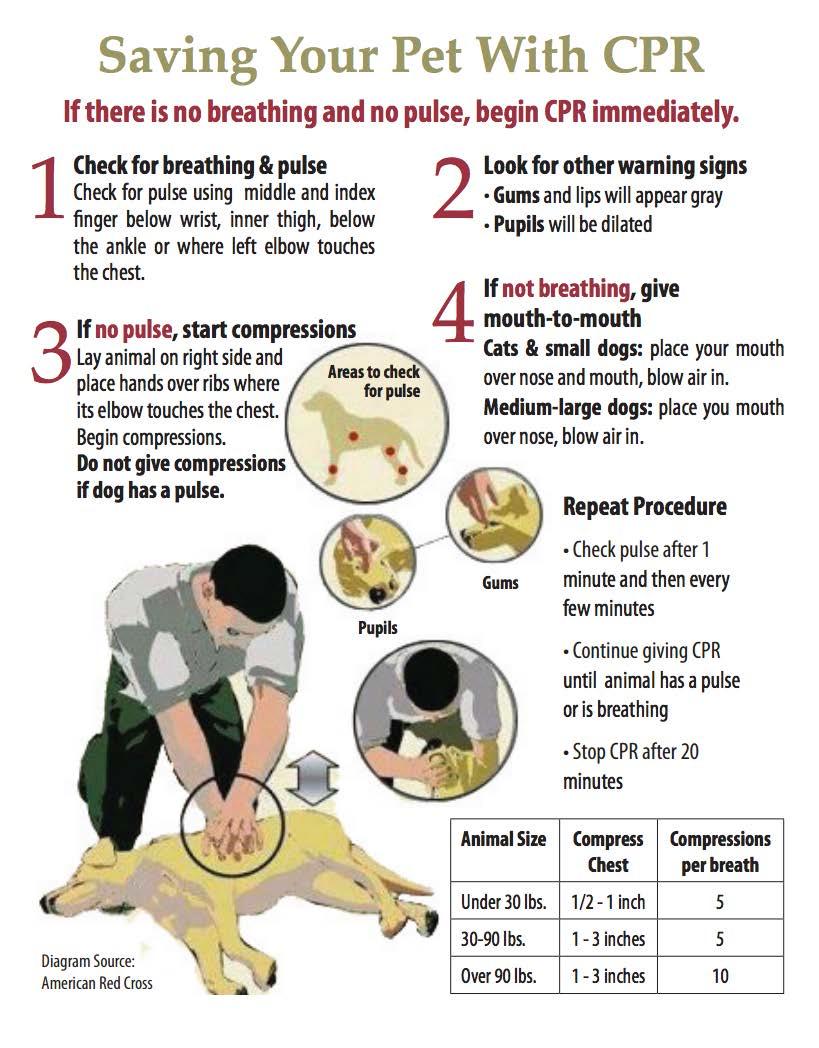
Look for the rise and fall of your pet’s chest. Is there any movement? If your pet isn’t breathing, it’s time for CPR. Feel for a pulse by placing your fingers on your pet’s upper thigh or near the base of the tail. A faint or absent pulse indicates a critical situation.
Consider how you would check your own breathing and pulse. This familiarity can help you assess your pet quickly. If you find yourself unsure, try focusing on one area—either breathing or pulse—before moving to the next.
Have you ever wondered how well you know your pet’s normal breathing patterns? This knowledge is invaluable now. Regularly observing your pet can make a difference in these crucial moments.
By mastering the initial assessment, you’re better equipped to handle emergencies. Stay alert and responsive, and remember, your quick actions can make all the difference for your furry friend.

Credit: todaysveterinarypractice.com
Performing Chest Compressions
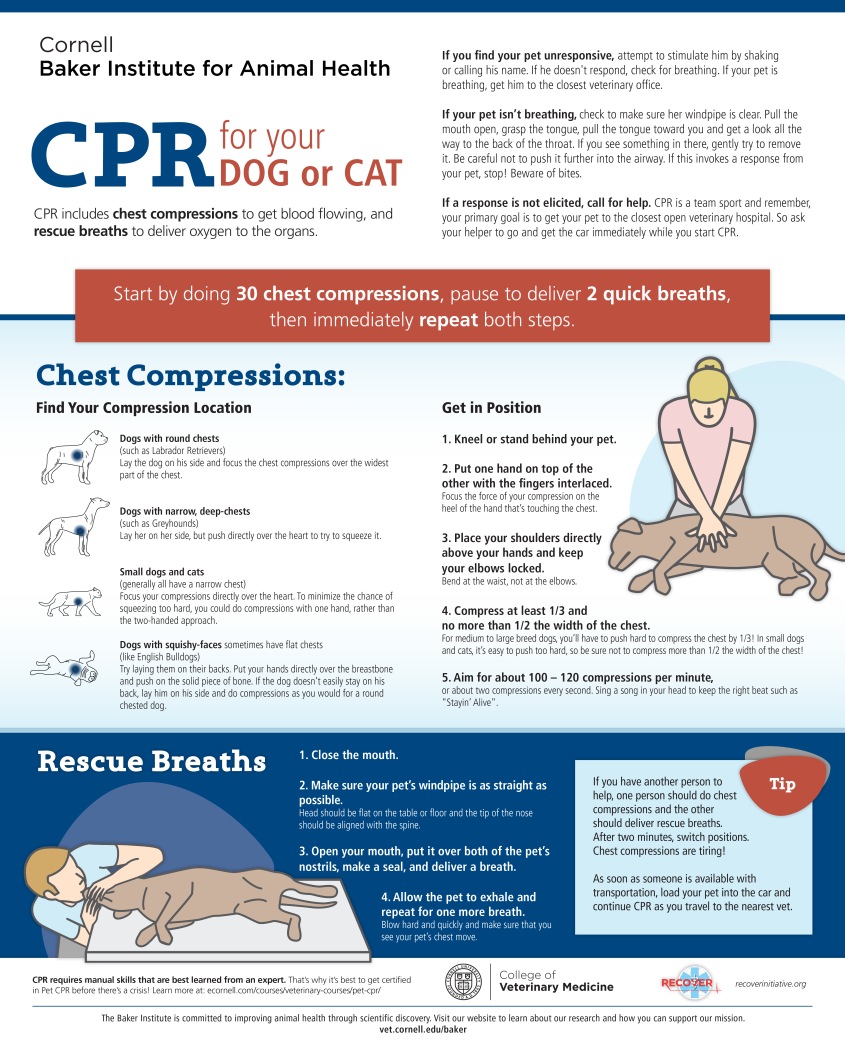
Performing chest compressions on pets can save lives in emergencies. Knowing the right technique is crucial. It ensures effective CPR. Follow these simple steps to help your pet in need.
Proper Hand Placement
Hand placement varies by pet size. For small dogs and cats, use your thumb and fingers. Compress the chest from both sides. For medium to large dogs, use one or both hands. Place them over the widest part of the chest.
Compression Rate And Depth
Maintain a steady rhythm. Aim for 100 to 120 compressions per minute. Compress the chest one-third to half its depth. Keep your arms straight. Use your body weight for pressure.
Special Techniques For Different Sizes
Small pets require gentle compressions. Use fingertips for delicate pressure. Medium pets need firm compressions. Use one hand or both, depending on size. Large pets need more force. Use both hands and lean in for strength.
Rescue Breathing For Pets
Pet CPR Guide offers essential tips on rescue breathing for pets, ensuring their safety in emergencies. Learn basic techniques to help your pet breathe when needed. Keep your furry friends safe with these easy-to-follow instructions.
Rescue breathing for pets is a crucial skill that every pet owner should have in their emergency toolkit. Just like humans, pets can encounter situations where they need immediate help to breathe. Knowing how to perform rescue breathing can make all the difference in saving your furry friend’s life. Whether it’s due to choking, drowning, or any other emergency, being prepared with the right techniques is essential.Mouth-to-snout Method
The mouth-to-snout method is the most effective way to deliver rescue breaths to most pets. Unlike humans, pets have a snout that can be sealed with your mouth to create a tight seal. To perform this, gently close your pet’s mouth and place your mouth over their nose. This ensures that the air you exhale goes directly into their lungs. It’s a simple yet powerful technique that can help your pet start breathing again.Frequency And Duration
How often should you give rescue breaths? The frequency and duration are critical. You need to deliver one breath every three to five seconds. Keep a steady pace to ensure your pet receives enough oxygen. Continue this until you see the chest rise or until professional help arrives. Remember, every second counts. Your quick response can dramatically increase the chances of your pet’s recovery. Have you ever found yourself in a situation where knowing a life-saving skill made a difference? Consider rescue breathing for pets as your superpower. It’s not just a technique; it’s a lifeline for your beloved animal companion.Alternating Between Compressions And Breaths
In an emergency, performing CPR on your pet can save their life. Knowing how to alternate between compressions and breaths is crucial. This technique helps circulate blood and oxygenate your pet’s body. It’s important to follow the right cycle of compressions and breaths. By doing so, you can increase the chances of their recovery. Understanding these steps can make all the difference.
Recommended Cycles
Experts suggest using a 30:2 cycle for pet CPR. Perform 30 chest compressions first. Then give 2 rescue breaths. Repeat this cycle consistently. The rhythm should be firm and steady. Each compression should be about one-third the chest’s depth. Maintain a rate of 100-120 compressions per minute. Keep your movements smooth and controlled.
Monitoring For Changes
Always monitor your pet for any signs of change. Look for breathing or movement. Check their gums for color changes. Gums turning pink is a positive sign. Listen for any sounds of breathing. Feel for a heartbeat by placing your hand on their chest. Stop CPR if they start breathing or regain consciousness. If no changes occur, continue CPR until help arrives.
When To Seek Veterinary Care
Knowing when to seek veterinary care is crucial in pet emergencies. Pet CPR can be a lifesaver. But some situations require professional help. Understanding the signs that need a vet can make a big difference. Acting quickly can improve your pet’s chances of recovery. This section will guide you on when to contact your vet.
Signs Of Recovery
After CPR, watch your pet for signs of recovery. Breathing should become steady. Heart rate should stabilize. Your pet might start to respond to your voice. These are positive signs. But they don’t mean your pet is out of danger. Always consult a vet to ensure your pet’s health.
Transporting Safely
Safe transport is vital after providing CPR. Use a secure carrier if possible. Keep your pet warm and calm. Avoid sudden movements. Drive smoothly to prevent further stress. If your pet is large, use a blanket or board as a stretcher. Getting to the vet safely is the next step in care.
Credit: allaboutfrenchies.com
Preventive Measures For Pet Health
Ensuring your pet’s health involves more than just emergency care. Preventive measures play a crucial role in keeping your furry friend healthy. Staying proactive can reduce the risk of illnesses and enhance your pet’s quality of life. Let’s explore some essential preventive steps.
Regular Check-ups
Regular vet visits are vital. They help detect potential health issues early. Schedule annual or bi-annual check-ups for your pet. During these visits, vets check for signs of illness or distress. They also update vaccinations and perform necessary tests. These routine check-ups keep your pet’s health in check.
Healthy Lifestyle Tips
Diet and exercise impact your pet’s health significantly. Provide a balanced diet suitable for your pet’s age and size. Avoid giving them table scraps or unhealthy treats. Regular exercise keeps your pet fit and happy. Daily walks or playtime can improve their physical and mental well-being. Maintain a clean living environment to prevent infections. Regular grooming helps in spotting health issues early. Check for ticks, fleas, or unusual lumps during grooming sessions.
Training And Certification
Ensuring your pet’s safety involves more than just regular visits to the vet. Knowing how to perform CPR on your pet can be life-saving in emergencies. This skill doesn’t just happen overnight; it requires training and, in some cases, certification. Whether you’re a pet owner or a professional, acquiring this knowledge can be crucial.
Finding Courses
Locating the right CPR course for pets can be a bit of a challenge. However, many community centers and animal welfare organizations offer specialized training sessions. Online platforms provide the convenience of learning from home, with video tutorials and interactive sessions. Local veterinary clinics sometimes host workshops, connecting you with professionals who can guide you through hands-on practice.
Have you ever thought about how you’d react if your pet suddenly needed CPR? A course can help you feel more prepared, no matter the situation. Some people have saved their pets’ lives because they took the time to learn these crucial skills.
Benefits Of Certification
Certification in pet CPR not only boosts your confidence but also increases your credibility if you work with animals. It’s a mark of dedication to animal welfare that others recognize and respect. Certified individuals often find it easier to access further learning opportunities and resources.
Imagine a scenario where you’re the go-to person for pet emergencies in your community. Certification can turn this into reality, empowering you to act decisively when seconds count. Additionally, many pet owners find peace of mind knowing they’re equipped to handle critical situations.
Do you think certification could change the way others see you as a pet owner? It’s not just a piece of paper; it’s a testament to your commitment to your furry friend’s safety.
Frequently Asked Questions
What Is Pet Cpr?
Pet CPR is a lifesaving technique for pets. It involves chest compressions and rescue breaths. This helps restore blood circulation and breathing. It’s crucial during emergencies like cardiac arrest.
How Do I Perform Cpr On Pets?
To perform CPR, check for breathing and pulse first. If absent, start chest compressions. Use rescue breaths every 30 compressions. Ensure the pet’s airway is clear.
When Should I Use Pet Cpr?
Use pet CPR during emergencies like drowning, choking, or cardiac arrest. Immediate action can save your pet’s life. If unsure, contact a vet immediately.
Can Pet Cpr Be Done On All Animals?
Pet CPR is mainly for dogs and cats. Techniques vary based on size and species. Consult a vet for guidance on other animals.
Conclusion
A pet’s life might depend on your CPR skills. Practice the steps regularly. Feel confident in emergencies. Remember, quick action saves lives. Stay calm, focus on breathing and chest compressions. Your pet counts on you. Every second matters. Keep CPR knowledge fresh.
Share this guide with fellow pet owners. Help them prepare too. Your efforts make a difference. Protect your furry friend’s life. Be the hero they need. Stay informed, stay ready. Save a life today!