
Have you ever found yourself captivated by the world of birds? There’s something truly fascinating about these feathered creatures that soar the skies with such grace and freedom.
Birds are everywhere, from your backyard to the distant forests, and each one has its own story to tell. Did you know that some birds can mimic human speech, while others travel thousands of miles during migration? These amazing facts are just the tip of the iceberg.
As you dive into this article, you’ll uncover intriguing details about birds that will change the way you see them forever. Ready to be amazed? Keep reading, and let’s explore the captivating world of birds together.
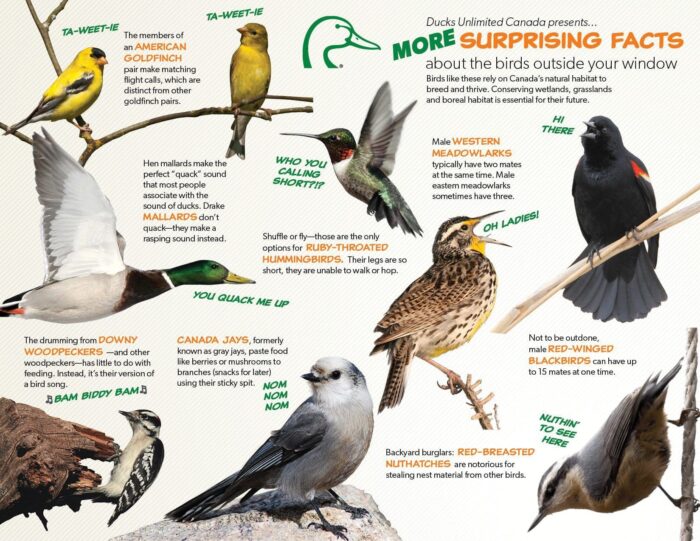
Credit: www.ducks.ca
Birds’ Ancient Lineage
Birds have an ancient lineage, tracing back to dinosaurs. These creatures evolved over millions of years. Their lightweight bones help them fly efficiently. Feathers serve for flight and insulation. Birds display diverse colors and sizes, adapting to various habitats worldwide.
Each species showcases unique behaviors and characteristics, enriching our planet’s biodiversity.
Birds are fascinating creatures that have captured human interest for centuries. Their vibrant colors, melodious songs, and awe-inspiring flights are just a few reasons why they captivate us. But did you know that birds boast an ancient lineage that dates back millions of years? Understanding this lineage offers intriguing insights into their evolution and how they have adapted over time.Discovering The Dinosaur Connection
Birds are the direct descendants of theropod dinosaurs, which roamed the Earth about 150 million years ago. Imagine looking at a sparrow and realizing it shares ancestry with the mighty T-Rex! This evolutionary link is a testament to the incredible adaptability and resilience of birds.Surviving The Mass Extinction
During the mass extinction event 66 million years ago, while many dinosaur species vanished, birds survived. Their small size and ability to fly might have helped them find shelter and resources. It’s a reminder that adaptability can be a key survival skill in the face of calamity.Feathers: A Revolutionary Trait
Feathers are not just for flight; they evolved as insulation and display features long before birds perfected flying. Next time you see a bird fluff its feathers, remember that these intricate structures are ancient innovations that have shaped their evolutionary journey.The Mystery Of The Archaeopteryx
Archaeopteryx is considered one of the earliest known birds, bridging the gap between dinosaurs and modern birds. Its fossilized remains reveal both avian and reptilian traits. It’s fascinating to think how this creature might have darted through prehistoric skies, setting the stage for the birds we know today.What Does This Mean For You?
Reflecting on birds’ ancient lineage prompts us to consider what lessons we can learn from their survival and evolution. How can adaptability and resilience help us in our own lives? Next time you watch a bird in flight, ponder the millions of years of evolution that brought it to your backyard. Birds are not just everyday creatures; they’re living history. Their lineage offers a window into the past and a mirror to our own potential for adaptation and growth. What other secrets might the avian world hold?Unique Feather Functions
Birds are fascinating creatures with a wide variety of feather functions. Feathers do more than just allow birds to fly. They play many roles in their survival and behavior. Understanding these unique functions can offer insights into the amazing world of birds.
Feathers For Insulation
Feathers help birds stay warm in cold weather. They trap air close to the bird’s body. This trapped air acts as an insulating layer. Birds fluff their feathers to increase this effect. It keeps them cozy even in freezing temperatures.
Feathers For Camouflage
Many birds use feathers to blend into their surroundings. This helps them hide from predators. Patterns and colors can mimic the environment. Some birds change feather colors with seasons. This adaptation improves their chances of survival.
Feathers For Communication
Feathers can send messages to other birds. Bright colors can attract mates. Some birds display their feathers in dances. This courtship behavior is key during mating season. Feathers also signal aggression or dominance. These visual cues are vital for social interactions.
Feathers For Protection
Feathers provide a shield against harsh weather. They protect skin from sun and rain. Some feathers are waterproof. This feature helps birds that live near water. Feathers can also deter insects and parasites. They are an essential part of a bird’s defense system.
Feathers For Flight
Feathers are crucial for a bird’s ability to fly. Wing feathers create lift and thrust. Tail feathers help with steering and balance. The structure of feathers makes them strong yet flexible. This combination is perfect for flight.
Avian Intelligence
When you think about intelligence, birds might not be the first creatures that come to mind. However, avian intelligence is a fascinating subject, showcasing the incredible capabilities of these feathered beings. From problem-solving to using tools, birds exhibit behaviors that challenge our understanding of intelligence. Have you ever wondered how smart a crow or a parrot can be? Let’s dive into the world of avian intelligence and uncover the surprising skills these creatures possess.
What Makes Birds Smart?
Birds have a unique brain structure that contributes to their intelligence. Unlike mammals, birds have a dense cluster of neurons in their brains, allowing them to process information efficiently. This is why you often see birds adapting quickly to new environments. They’re not just acting on instinct; they’re making calculated decisions based on their experiences.
Problem Solving Skills
Some birds are excellent problem solvers. Take crows, for example. They can use tools to get food, and even remember human faces. In one experiment, crows were able to solve a complex puzzle involving multiple steps to obtain a treat. This shows their ability to plan and execute tasks, a sign of high intelligence.
Communication Abilities
Parrots are known for their ability to mimic human speech. But their communication skills go beyond just copying sounds. Parrots can understand concepts and even hold basic conversations. They use their vocalizations to express emotions and desires, making them highly social creatures.
Memory And Navigation
Migration is a testament to a bird’s impressive memory and navigation skills. Birds like the Arctic Tern travel thousands of miles each year, using the Earth’s magnetic field and stars to guide them. This ability requires a remarkable memory and spatial awareness. Next time you see a flock of birds flying in formation, consider the intricate knowledge they’re using to reach their destination.
Your Role In Understanding Avian Intelligence
Why does understanding avian intelligence matter to you? It opens up possibilities for conservation efforts and habitat protection. By appreciating their intelligence, you can contribute to preserving these fascinating creatures. Next time you observe a bird, take a moment to appreciate its skills. You might find yourself looking at the world through a new lens.
Colorful Communication
Birds captivate us with their dazzling colors. Each hue serves a purpose beyond beauty. Their plumage plays a vital role in communication. This visual language conveys messages across species. Colors signal danger, courtship, and territory.
Understanding Avian Color Vision
Birds see a broader spectrum than humans. They detect ultraviolet light. This ability enhances their color perception. It aids in identifying mates and rivals. Their world is richer in color.
Plumage As A Social Signal
Feathers convey social status among birds. Bright colors often indicate health. Healthy birds attract more mates. Dull feathers can signal age or weakness. It’s nature’s way of communicating fitness.
Camouflage And Survival
Some birds use colors for camouflage. It helps them blend with surroundings. This tactic keeps them safe from predators. Birds like the ptarmigan change colors seasonally. It ensures better protection year-round.
Warning Colors And Predator Deterrence
Vibrant colors can warn predators. Poisonous birds often have vivid plumage. These colors signal danger. Predators learn to avoid them. It’s a survival tactic in nature.
Colorful Courtship Displays
Birds use colors to attract mates. Males often display vivid plumage. These displays are part of courtship rituals. Peacocks are a famous example. Their tail feathers dazzle potential mates.
Territorial Markers
Colors can mark territories among birds. Bright plumage can signal ownership. It deters rivals from invading. This visual cue maintains peace. Birds respect these colorful boundaries.
Remarkable Migratory Journeys
Birds embark on extraordinary migratory journeys each year, traveling thousands of miles. These journeys reveal fascinating facts, like the Arctic Tern’s 44,000-mile round trip. Some birds navigate using the stars and Earth’s magnetic field, showcasing incredible instincts.
Birds are some of the most fascinating creatures on our planet, and their migratory journeys are truly remarkable. Imagine traveling thousands of miles, often across vast oceans and inhospitable landscapes, guided by instinct and the Earth’s magnetic fields. These journeys showcase incredible endurance, adaptability, and navigational skills. As you learn about these journeys, you might find yourself inspired by the sheer determination and resilience of these feathered travelers.Understanding The Purpose Of Migration
Birds migrate for various reasons, primarily to find food, suitable breeding grounds, and warmer climates. The change in seasons triggers these journeys, pushing birds to move from their breeding areas to regions where food is more abundant. Have you ever wondered how birds decide when to start their migration? It’s often a mix of environmental cues and internal biological clocks.Record-breaking Distances
Some birds travel incredible distances during migration. The Arctic Tern, for example, covers around 44,000 miles annually, traveling from the Arctic to the Antarctic and back. This journey is the longest of any animal in the world. Imagine the stamina required for such a trip! Another example is the Bar-tailed Godwit, which flies non-stop over 7,000 miles from Alaska to New Zealand. Can you envision flying for days without a break?Navigational Mastery
Birds use a variety of methods to navigate, including the sun, stars, and Earth’s magnetic fields. They possess an innate ability to orient themselves and find their way across vast distances. Some birds even use landmarks like mountains and coastlines to guide them. Have you ever gotten lost on a road trip? Birds rarely do, thanks to their incredible navigational skills.Challenges Along The Way
Migration is fraught with challenges. Weather conditions, exhaustion, and predators all pose significant threats. Yet, birds continue their journey, driven by survival instincts. How do they manage such obstacles? Adaptation plays a key role. Birds often travel in flocks for protection, and some species plan their routes to avoid dangerous areas.How You Can Help
Your actions can make a difference in these migratory journeys. Providing safe habitats, avoiding pollution, and supporting conservation efforts are ways you can help. Consider planting native plants in your garden to offer resting spots for tired travelers. What steps will you take to ensure these remarkable journeys continue for generations to come? The world of migratory birds is vast and full of wonder. Next time you see a flock of birds soaring high, think about the incredible journey they might be on. Their resilience and determination offer lessons for us all.Diverse Beak Adaptations
Birds showcase diverse beak adaptations tailored to their feeding habits and environment. Parrots use strong beaks to crack nuts, while hummingbirds have long beaks for sipping nectar. Woodpeckers possess chisel-like beaks to drill into trees, highlighting nature’s incredible design.
Birds are fascinating creatures, and one of their most intriguing features is their diverse beak adaptations. Each bird species has a beak uniquely suited to its diet and lifestyle, offering insights into its behavior and habitat. From cracking nuts to probing flowers, bird beaks come in all shapes and sizes, each with a story to tell.Birds have adapted their beaks in remarkable ways to thrive in their environments. Have you ever marveled at the hummingbird’s slender beak? This specialized tool allows them to reach the nectar deep inside flowers. Imagine how different their world would be without it!
Understanding Beak Shapes
Beak shapes are more than just a matter of aesthetics. A hawk’s sharp, hooked beak is perfect for tearing meat, while a duck’s broad, flat beak helps them filter water for small creatures. Next time you watch birds, pay attention to their beaks. You might discover a new appreciation for their ingenious designs.Beaks As Tools
A woodpecker’s chisel-like beak is a powerful tool. It allows them to drill into trees to find insects. This adaptation helps them access food that many other birds cannot. Doesn’t it make you wonder how birds have evolved such specialized tools?Survival And Competition
In nature, survival often depends on competition. Finches on the Galápagos Islands have different beak sizes depending on the seeds available. During droughts, birds with beaks suited to the available food survive better. This shows how crucial beak adaptations can be in the struggle for survival.Personal Observations
I remember watching sparrows in my backyard. Their small, conical beaks deftly cracked open seeds. It made me realize how these tiny birds are perfectly adapted to their diet. What adaptations have you noticed in your local birds?Bird beak adaptations are a testament to the incredible variety of life on our planet. By understanding these adaptations, you gain a deeper appreciation for the complexity of ecosystems. Next time you spot a bird, take a closer look at its beak, and consider the remarkable evolution behind it.
Birds’ Role In Ecosystems
Birds play crucial roles in ecosystems by controlling pests and pollinating plants. They disperse seeds, helping forests grow. Their presence indicates a healthy environment.
Birds play a crucial role in maintaining the balance of ecosystems. They are more than just delightful creatures to observe. They contribute significantly to the health of our planet. Understanding their roles can enhance our appreciation and encourage us to protect them.Seed Dispersal And Plant Growth
Birds are natural gardeners. Many species consume fruits and inadvertently help plants spread their seeds. After eating, they travel great distances and expel the seeds in new locations, promoting plant diversity. Have you ever wondered why certain plants grow in specific areas? Birds might be the reason. They help maintain and expand habitats, which supports other wildlife.Pollination Partners
While bees often get the spotlight for pollination, birds like hummingbirds are essential too. They feed on nectar and unintentionally transport pollen from one flower to another. This process is vital for the reproduction of many plants. Consider the vibrant flowers in your garden. Some of them might owe their existence to these feathered pollinators. By attracting these birds, you can enhance your garden’s beauty and biodiversity.Pest Control
Birds are natural pest controllers. They feed on insects, rodents, and other small animals that can harm crops and gardens. This reduces the need for chemical pesticides. Think about how often you see birds pecking at the ground or darting through the air. They’re likely on the hunt for pests. Their presence in your yard can lead to a healthier, more balanced ecosystem.Scavengers And Clean-up Crew
Certain birds, like vultures, play a critical role in cleaning up the environment. They consume dead animals, preventing the spread of disease and recycling nutrients back into the ecosystem. Have you ever seen a vulture soaring high in the sky? They’re nature’s cleanup crew, ensuring that dead matter is efficiently dealt with. Their work keeps ecosystems clean and functioning smoothly.Indicators Of Environmental Health
Birds are excellent indicators of environmental health. Changes in bird populations can signal shifts in ecosystems, such as pollution or climate change impacts. Monitoring birds can provide early warnings about environmental issues. When you observe bird populations in your area, you’re getting a glimpse into the health of your local environment. Next time you see a decline or change in species, it might be worth investigating further. Understanding the essential roles birds play can inspire us to protect them. How can you contribute to their conservation efforts? Simple actions like creating bird-friendly spaces can make a difference.
Credit: www.youtube.com
Courtship And Mating Rituals
Birds exhibit fascinating courtship and mating rituals. For example, the male bowerbird creates intricate structures decorated with colorful objects to attract females. The peacock spreads its vibrant tail feathers in a mesmerizing display. These rituals highlight the diverse and captivating ways birds communicate and attract mates.
Birds are fascinating creatures, and their courtship and mating rituals are a testament to their diverse and complex behaviors. These rituals are not just about reproduction; they are social interactions that can be quite elaborate and captivating. From the beautiful dances of cranes to the mesmerizing displays of peacocks, bird courtship is a spectacle of nature. But have you ever wondered why birds go to such lengths in their mating rituals? Let’s dive into some intriguing aspects of how birds woo their partners.Visual Displays: Nature’s Drama
Birds often use visual displays to attract mates. Think of the peacock’s tail feathers, which it fans out like a dazzling firework. This is not merely about aesthetics; it’s about showing off genetic fitness. The more vibrant and symmetrical the feathers, the more attractive the peacock is to potential mates. Why does symmetry matter? It signals health and vitality, traits desirable in offspring. Have you ever seen a bird puffing up its chest or spreading its wings? These actions are not just for show—they’re indicators of strength and dominance.Vocal Serenades: Songs From The Heart
Birds are renowned for their songs. These vocalizations serve multiple purposes, from claiming territory to wooing mates. The complexity of a bird’s song can be as enticing as a musician’s melody. Consider the nightingale, whose song can be both intricate and soothing. It’s a serenade that says, “Choose me, for I am strong and capable.” Have you ever stopped to listen to bird songs in your garden? They might be more than pleasant background music; they could be expressions of love.Gift Giving: Tokens Of Affection
Some birds take courtship to a new level by offering gifts. Male bowerbirds collect colorful objects to decorate their nests, creating a visual masterpiece. These objects can range from berries to bits of glass, each chosen carefully to appeal to a potential mate. Does this remind you of human courtship rituals? The act of giving is a universal sign of affection and commitment. Next time you see a bird carrying something, it might be more than just food—it could be a heartfelt gift.Dance Moves: Choreography Of Love
Birds often engage in elaborate dances to attract mates. The crane’s dance is a graceful performance, full of bows, leaps, and spins. These movements are a display of agility and vitality, traits that are attractive to potential partners. Have you ever tried dancing to impress someone? In the bird world, these displays are serious business, with each step carefully executed to convey strength and coordination.Mutual Preening: The Bonding Ritual
Mutual preening is a ritual where birds groom each other’s feathers. It’s an act of intimacy that strengthens bonds between mates. This behavior is not just about keeping clean; it’s about building trust and companionship. Imagine sharing a moment with someone where you feel completely at ease. That’s what mutual preening is for birds—a bonding experience that reinforces their relationship. Bird courtship and mating rituals are a window into the intricate social lives of these creatures. As you observe birds around you, consider the purpose behind their behaviors. What do their actions say about their relationships? Engaging with these questions can deepen your appreciation for the natural world and the wonders of avian life.Vocalization And Songs
Birds are known for their beautiful vocalizations and songs. These sounds are not just for pleasure; they serve many purposes. Birds use songs to communicate, attract mates, and mark territory. Each species has unique vocal traits, making their calls fascinating to study.
Understanding Bird Songs
Bird songs are complex and varied. They can be sweet melodies or simple chirps. Male birds often sing to impress females. Their tunes showcase strength and health. Some bird songs are learned, while others are innate. This makes each song special.
The Role Of Vocalization
Vocalization helps birds communicate. It signals danger or calls for companionship. Birds have different calls for different situations. A warning call alerts others of predators. A soft call may invite a partner to nest.
Seasonal Singing Patterns
Birds sing more during certain seasons. Spring is a busy time for bird songs. Singing peaks during mating season. This helps birds find partners and establish bonds. Summer songs may signal territory or food availability.
Regional Variations In Songs
Bird songs can vary by region. Birds adapt their songs to their environment. Some develop unique dialects. This allows them to communicate effectively with their community. Regional songs create a rich diversity of sounds.
Impact Of Environment On Vocalization
The environment influences bird vocalization. Dense forests may lead to louder calls. Open fields may promote softer songs. Birds adjust their volume based on surroundings. Environmental factors shape their communication methods.
Survival Strategies
Birds are fascinating creatures, not only for their beauty and songs but for their incredible survival strategies. From the arctic tundra to the humid rainforests, birds have adapted to thrive in diverse environments. Their survival tactics are a testament to nature’s ingenuity. Let’s dive into some intriguing aspects of how birds manage to survive against the odds.
Camouflage Techniques
Have you ever wondered how a tiny bird avoids predators in the wild? Camouflage is their secret weapon. Many birds have feathers that mimic the colors and patterns of their surroundings, making them nearly invisible to predators.
Take the tawny frogmouth, for example. Its feathers resemble tree bark, allowing it to blend seamlessly into its environment. Next time you’re in a forest, try spotting one. You’ll find it’s easier said than done.
Migratory Instincts
Migration is another incredible survival strategy. Birds travel thousands of miles to find food, breed, or escape harsh weather. This journey is nothing short of a marathon.
Consider the Arctic Tern; it migrates from the Arctic to the Antarctic and back each year. This journey, covering around 44,000 miles, ensures it always enjoys the summer. Would you have the stamina for such a long trip?
Unique Feeding Habits
Birds have developed specialized feeding habits to survive in different environments. These habits are often unique and tailored to available food sources.
The woodpecker’s ability to peck into trees to find insects is a perfect example. This skill not only provides food but also helps them avoid competition from other birds. Have you ever tried watching a woodpecker at work? It’s a mesmerizing sight.
Social Structures And Communication
Birds often rely on social structures to survive. These groups can provide safety in numbers and help in finding food and shelter.
The complex communication systems of birds are equally fascinating. From warning calls to mating songs, these vocalizations play a crucial role in survival. Imagine deciphering these calls; what secrets might you uncover?
Adaptations To Climate
Birds have adapted to survive in various climates. From insulating feathers to specialized beaks, these adaptations are essential for their survival.
The Emperor Penguin’s ability to withstand freezing temperatures by huddling together is a remarkable adaptation. Could you imagine surviving the harsh Antarctic climate with such a simple yet effective strategy?
Birds are masters of survival, with strategies that are both ingenious and awe-inspiring. Next time you see a bird, take a moment to appreciate the complexity of its survival tactics. What might you learn from observing these feathered survivors?
Credit: www.weareteachers.com
Frequently Asked Questions
What Is The Smallest Bird?
The smallest bird is the Bee Hummingbird. It measures about 2 inches long. It weighs less than 2 grams. Found in Cuba, it’s known for its vibrant colors. Despite its size, it can fly swiftly and hover in mid-air.
How Do Birds Communicate?
Birds communicate through vocalizations and body language. They sing to attract mates and establish territory. Calls warn of danger or signal food sources. Body postures convey aggression or submission. Each species has unique communication patterns that enhance survival.
Can Birds See Colors?
Yes, birds can see colors. They have more color receptors than humans. Birds perceive ultraviolet light, enhancing their vision. This ability aids in finding food and mates. Colorful plumage plays a role in attracting partners and deterring predators.
Why Do Birds Migrate?
Birds migrate for food and breeding. Seasonal changes affect food availability. Migration allows access to abundant resources. Breeding grounds offer safer environments for raising young. Long-distance travel is guided by environmental cues. Migration is vital for survival and reproduction.
Conclusion
Birds truly captivate with their vibrant colors and melodious songs. These winged wonders inhabit every corner of the globe. Each species has unique traits and fascinating behaviors. From the intelligent parrots to the majestic eagles, they never cease to amaze.
Birdwatchers and nature lovers find endless joy observing them. The world of birds offers endless learning opportunities. Their ability to fly inspires us all. Next time you see a bird, pause and admire its beauty. Appreciate the diverse avian world around us.
They remind us of nature’s incredible diversity and charm. Keep exploring the wonders of these amazing creatures.